Table of contents
The landscape of architectural insertion tools
Architects and draftsmen today have several options for creating architectural insertions.
Each method has its strengths and limitations. The right choice depends on budget, quality requirements, and production volume.
Traditional method: Photoshop
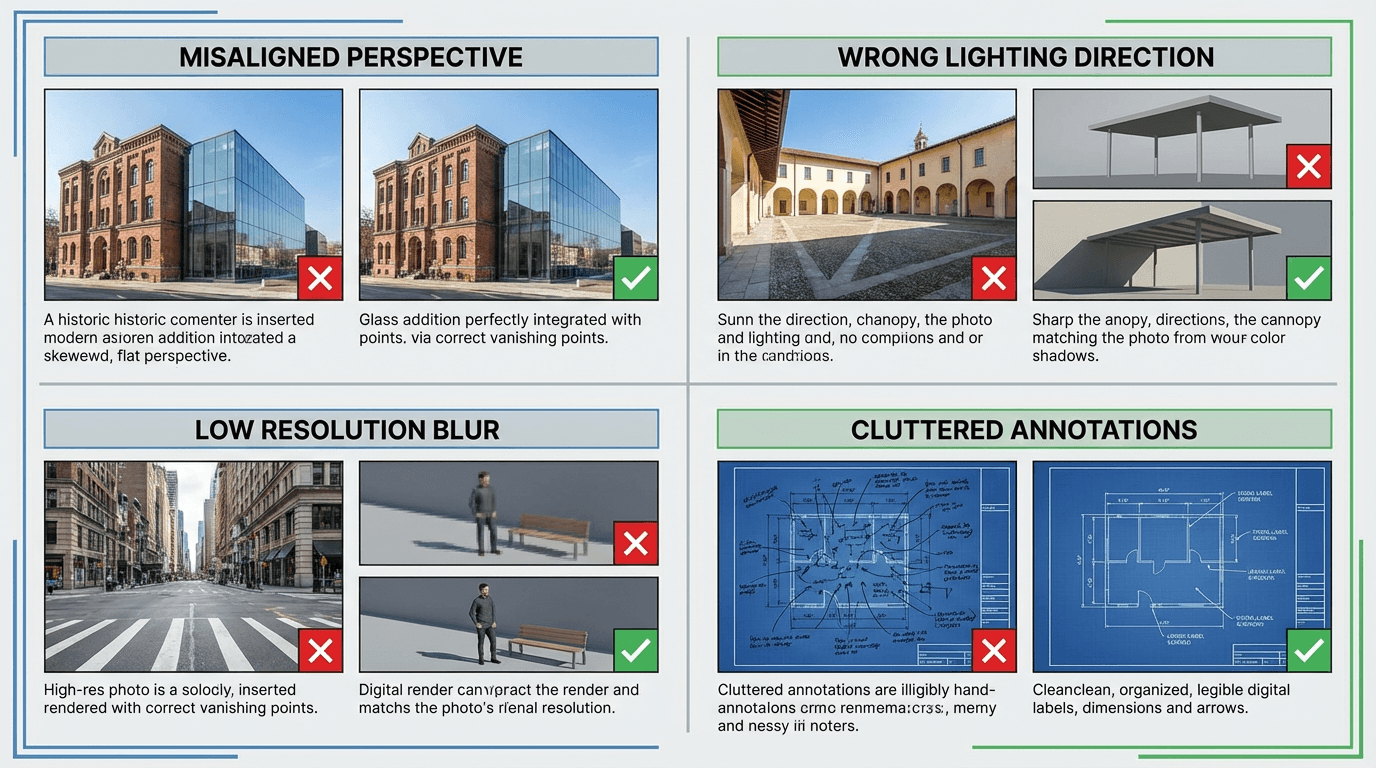
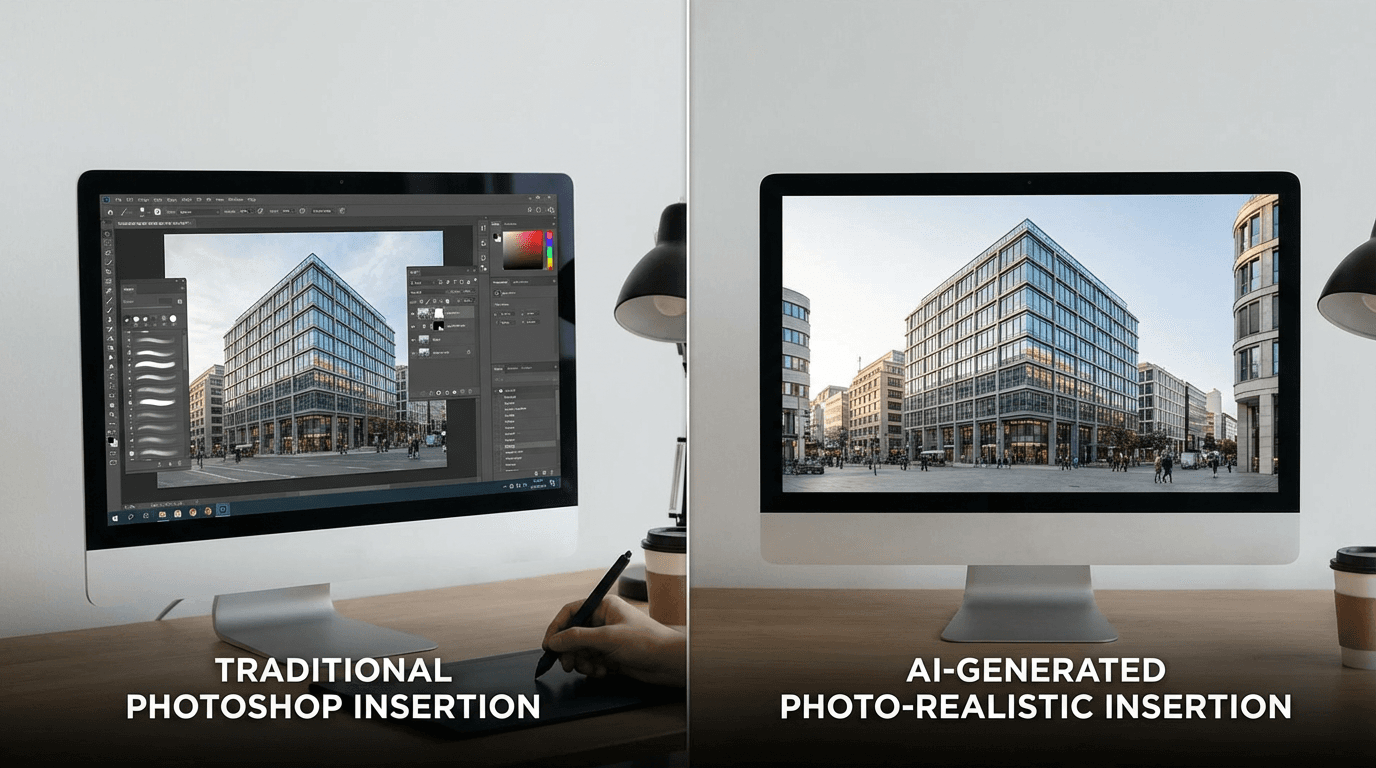
The classic method involves manually masking the 3D render in Photoshop, then integrating it onto a site photo while adjusting perspectives, lighting, and shadows.
It's meticulous work that requires real graphic design expertise.
- Average time: 2 to 8 hours per insertion
- Cost: 150 to 500 euros (outsourced) or internal time
- Quality: excellent when done by an experienced graphic designer
- Flexibility: total control over every detail
Rendering engines: V-Ray, Lumion, Enscape
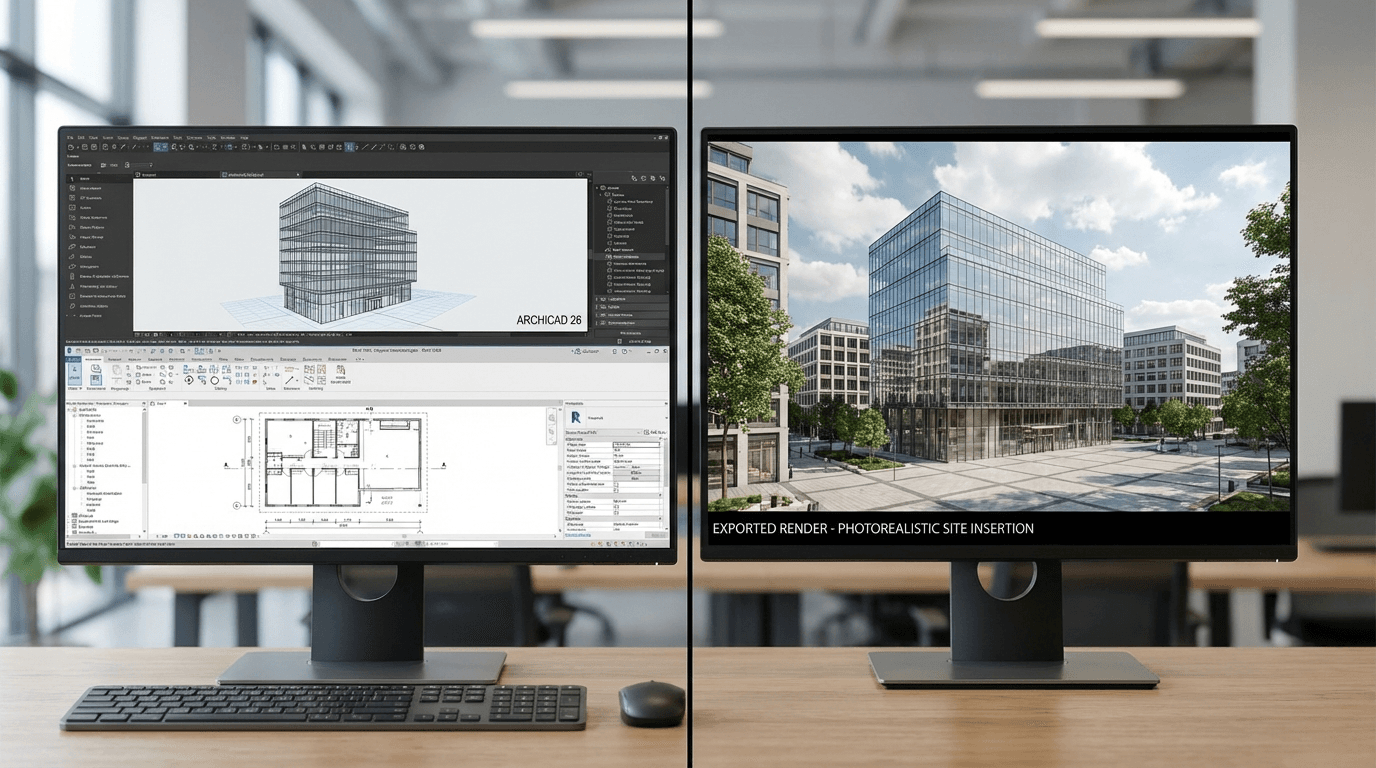
These tools generate photorealistic renders directly from the 3D model. They're very effective at producing high-quality images.
However, they don't actually insert onto existing site photos. The render remains disconnected from the real context.
- Average time: 30 minutes to 2 hours (setup + render)
- Cost: software license (500 to 2000 euros/year)
- Quality: excellent for renders, limited for site integration
- Limitation: no automatic insertion on real photos
AI insertion: 3D Insertion
The AI approach automatically analyzes the render and site photo to create a coherent insertion.
No graphic skills required. Results are delivered in seconds.
- Average time: seconds to 2 minutes
- Cost: 1.50 euros per generation
- Quality: photorealistic, sufficient for most professional uses
- Key advantage: speed and accessibility
Which tool for which use?
The right tool depends on the context. Here are recommendations by use case:
Building permits: 3D Insertion is ideal. Quality is sufficient and time savings are considerable.
Prestige architecture competitions: Photoshop remains preferable if budget allows, for pixel-perfect control.
Quick client presentations: 3D Insertion lets you multiply angles and variants without blowing deadlines.
Volume production: AI is unbeatable. 10 insertions in 10 minutes instead of 10 days.
Conclusion
AI insertion doesn't completely replace traditional methods. But it covers 80% of daily professional architecture needs.
For everyday projects — permits, presentations, feasibility studies — it's become the most rational tool, at a fraction of the cost and time.